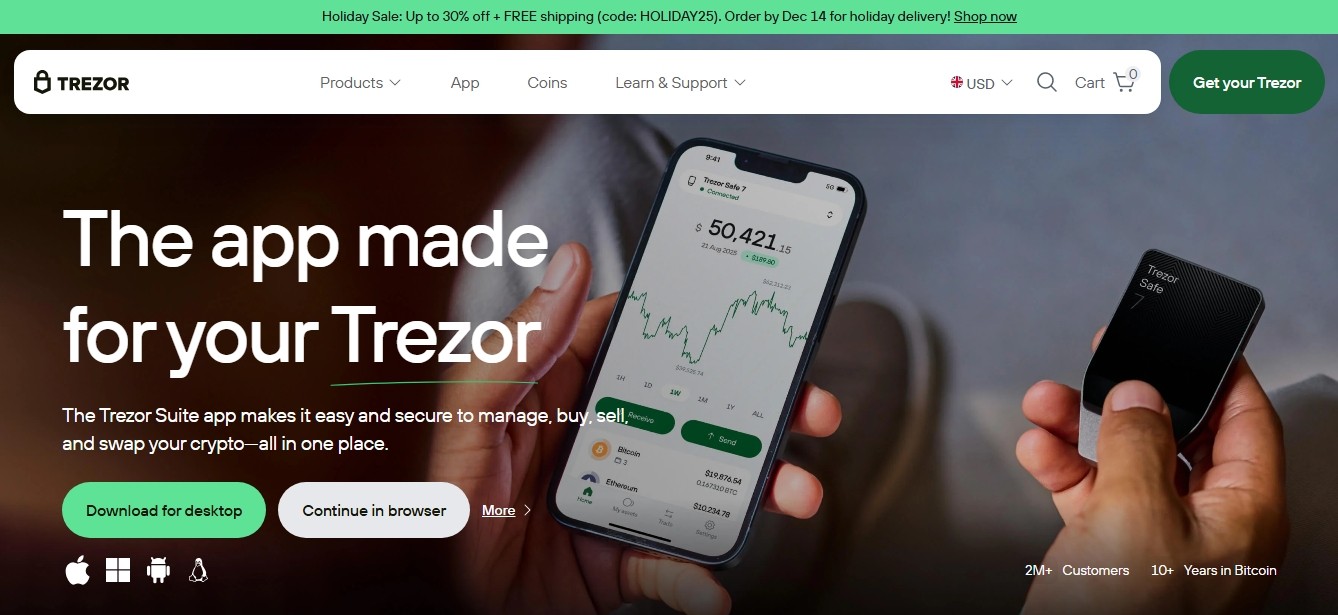
Start Your Secure Crypto Journey with Trezor
Introduction: Why Trezor?
In today’s digital world, cryptocurrencies are revolutionizing finance, offering freedom, privacy, and control. But with great power comes great responsibility—your digital assets are only as safe as the storage method you choose. This is where Trezor comes in. Trezor is the industry-leading hardware wallet, designed to keep your cryptocurrency safe, secure, and in your control.
Unlike software wallets that can be compromised by malware or phishing attacks, a Trezor device stores your private keys offline. This ensures that even if your computer is infected, your crypto remains untouchable. Trezor empowers you to securely manage your Bitcoin, Ethereum, and hundreds of other cryptocurrencies with confidence.
This guide will take you through everything you need to know to start using Trezor—step by step.
1. Understanding Hardware Wallets
Before diving into setup, it’s important to understand why hardware wallets matter.
1.1 What is a Hardware Wallet?
A hardware wallet is a small device designed to securely store your cryptocurrency private keys offline. These private keys are essentially the passwords that allow you to access and spend your crypto. Unlike software wallets, hardware wallets are immune to malware, phishing attacks, and computer hacking.
1.2 Why Trezor?
Trezor stands out because of its reliability, transparency, and ease of use. It’s open-source, meaning the code is publicly available for review, ensuring that it’s secure and trustworthy. Trezor supports hundreds of cryptocurrencies, provides secure backups, and offers seamless integration with popular crypto services.
1.3 How It Works
When you use Trezor, your private keys never leave the device. When signing transactions, the device confirms the details on its screen and signs them internally, sending only the signed transaction to the network. This ensures that your keys are never exposed online.
2. Getting Started with Your Trezor
Starting with Trezor is simple. Here’s what you need to do step by step.
2.1 Unboxing Your Device
Your Trezor package contains:
The Trezor hardware wallet
USB cable
Recovery seed card
User manual
Before using your device, verify the authenticity. Trezor ships with tamper-evident seals. If the seal looks broken or tampered with, do not use the device.
2.2 Connecting Your Trezor
Connect your Trezor to your computer using the included USB cable.
Visit Trezor.io/start to launch the official setup interface.
Follow the on-screen instructions for your specific device model.
2.3 Installing Firmware
Firmware is the operating system of your device. Trezor ensures your device is always updated to the latest firmware to stay secure. The setup process will guide you through installing the latest version.
Important: Never install firmware from unofficial sources. Only update via the official Trezor website.
3. Securing Your Wallet
Security is the core of Trezor’s philosophy. Here’s how to make sure your wallet remains safe.
3.1 Creating a PIN Code
After firmware installation, set up a PIN code. This PIN will protect your device even if it’s lost or stolen. Choose a PIN that is difficult to guess, but easy for you to remember. Avoid sequential numbers or repeated digits.
3.2 Backup with Recovery Seed
During setup, Trezor generates a 24-word recovery seed. This seed is crucial—it’s the only way to recover your wallet if your device is lost, stolen, or damaged.
Key tips:
Write your recovery seed on the provided card, not digitally.
Store it in a safe, secure place. Multiple copies in separate locations are recommended.
Never share your recovery seed with anyone. Trezor employees or support will never ask for it.
3.3 Advanced Security Features
Trezor offers additional security options:
Passphrase Protection: Adds a hidden wallet layer accessible only with an extra passphrase.
Device Verification: Trezor can verify its own integrity to ensure firmware hasn’t been tampered with.
Two-Factor Authentication (2FA): Can be integrated for online accounts supporting Trezor security.
4. Adding and Managing Cryptocurrency
Once your Trezor is set up and secured, it’s time to start using it.
4.1 Supported Coins
Trezor supports over 1,000 cryptocurrencies, including:
Bitcoin (BTC)
Ethereum (ETH)
Litecoin (LTC)
Bitcoin Cash (BCH)
XRP, and many more.
You can check the full list on the Trezor website, which is regularly updated.
4.2 Using Trezor Wallet Interface
The Trezor Wallet interface is intuitive. From here you can:
Send and receive cryptocurrency
Check balances
Manage multiple wallets
Integrate with DeFi apps
4.3 Sending and Receiving Crypto
Receiving:
Select the cryptocurrency you want to receive.
Generate a new receiving address.
Share this address to receive funds.
Sending:
Enter the recipient’s address.
Verify the address on your Trezor screen.
Confirm the transaction.
Important: Always verify addresses carefully. Trezor displays them on-device to prevent malware from manipulating them.
5. Trezor for Everyday Use
Trezor isn’t just for storage; it’s for active crypto users.
5.1 Integrations with Third-Party Apps
Trezor integrates seamlessly with:
Exchanges: Direct trading without exposing private keys.
DeFi Platforms: Access decentralized finance securely.
Portfolio Trackers: Monitor your assets in real-time.
5.2 Managing Multiple Accounts
Trezor allows multiple accounts per cryptocurrency. This is useful for:
Separating personal and business funds
Managing multiple investment strategies
Organizing crypto for budgeting purposes
5.3 Mobile Access
Using Trezor with mobile devices is easy with compatible apps. Pair your device via USB or Bluetooth (for Trezor Model T with compatible adapters), ensuring secure mobile access to your crypto.
6. Best Practices for Long-Term Security
Keeping your crypto secure requires ongoing vigilance.
6.1 Physical Security
Store your Trezor in a safe location.
Consider fireproof and waterproof storage for recovery seeds.
6.2 Online Security Hygiene
Avoid phishing emails and fake websites. Always use trezor.io.
Keep your computer and browser updated.
Use strong passwords for associated accounts.
6.3 Regular Firmware Updates
Trezor regularly releases firmware updates. These include security enhancements and new features. Install updates promptly via the official Trezor site.
7. Troubleshooting and Support
Even experienced users can face challenges. Trezor support is designed to help without compromising security.
Official Support: Visit trezor.io/support for guides and FAQs.
Community Forums: Engage with other users for tips and solutions.
Do Not Share Your Recovery Seed: Trezor support will never ask for it.
8. Conclusion: Take Control of Your Crypto
Starting with Trezor is more than acquiring a device—it’s gaining control of your financial future. With Trezor, your cryptocurrency is secure, private, and always accessible only by you.
From setup to everyday use, Trezor combines simplicity with robust security, ensuring you can participate in the crypto world confidently. Whether you’re a beginner or an experienced investor, Trezor is your gateway to safe, reliable crypto management.
Take the first step today—connect your Trezor, secure your wallet, and start your journey toward financial sovereignty.