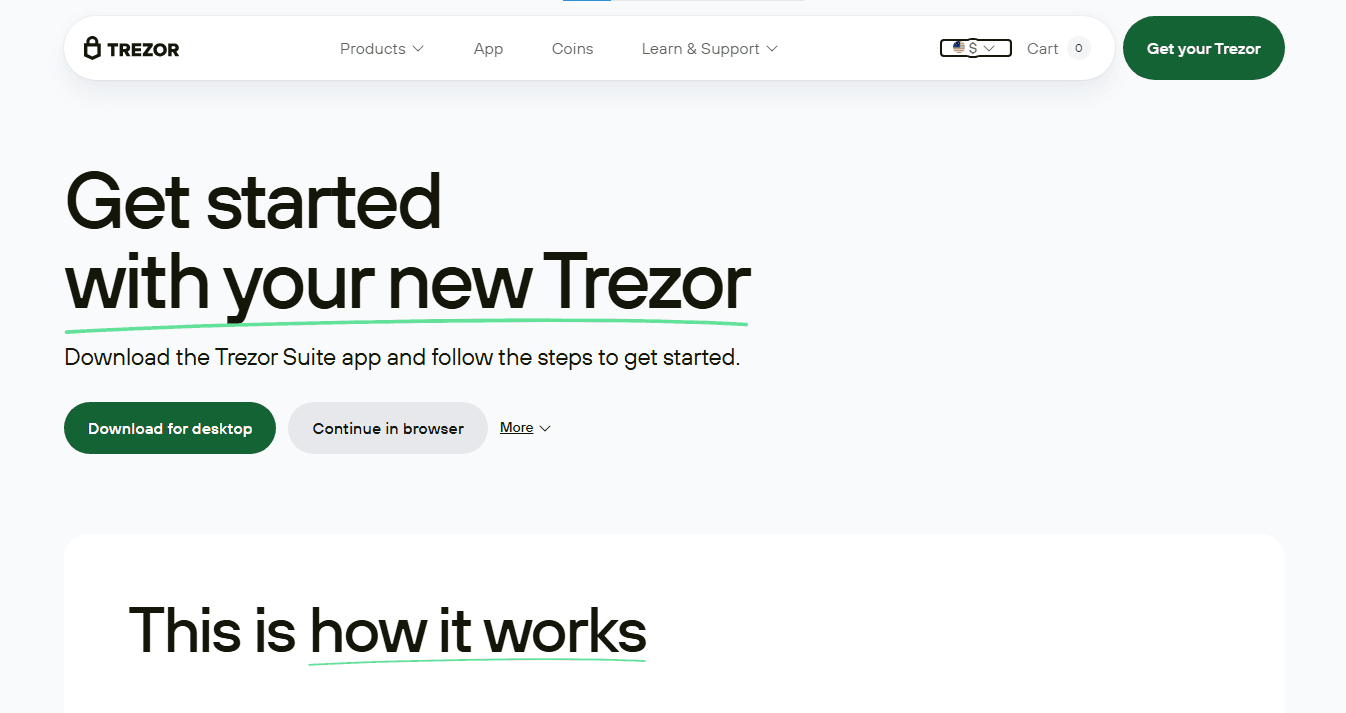
Getting Started with Trezor: Your Complete Guide to Secure Cryptocurrency Storage
Introduction
In an era where digital assets are increasingly valuable, securing your cryptocurrencies has never been more important. While exchanges and online wallets offer convenience, they are also prime targets for hackers. Trezor, a leading hardware wallet, provides a solution by keeping your private keys offline, secure, and under your control.
This guide is designed to walk you through everything you need to start using your Trezor wallet, from unboxing to advanced security practices. By the end, you will have the confidence to securely store, manage, and transact your digital assets with ease.
1. Why Choose Trezor for Your Crypto Security?
1.1 The Importance of Hardware Wallets
Digital currencies are secured by private keys—essentially the password to your funds. If these keys are exposed, stolen, or lost, your assets are at risk. Unlike software wallets connected to the internet, hardware wallets like Trezor store your keys offline, significantly reducing the risk of hacks or malware attacks.
1.2 Trezor Models and Features
Trezor offers multiple models designed for different users:
Trezor One: Ideal for beginners, supports most major cryptocurrencies, and provides robust security features.
Trezor Model T: Advanced model with a touchscreen, supports additional cryptocurrencies, and offers encrypted storage features.
Both models prioritize security, usability, and seamless integration with crypto management apps.
1.3 Security Advantages
PIN Protection: Prevents unauthorized access.
Passphrase Support: Adds an extra layer of security.
Recovery Seed: Allows you to recover your wallet if lost or damaged.
2. Unboxing and First Impressions
2.1 What’s in the Box
When you receive your Trezor device, ensure the package is intact and tamper-free. Inside, you should find:
The Trezor device
USB cable
Recovery seed cards
Quick start guide
2.2 Initial Setup Safety Tips
Always purchase Trezor from the official website or authorized resellers.
Never share your recovery seed or PIN with anyone.
Set up your device in a private, secure environment.
3. Setting Up Your Trezor Wallet
3.1 Connecting Your Device
Connect your Trezor to your computer via USB.
Visit Trezor.io/start to begin the setup process.
3.2 Installing Trezor Bridge
Trezor Bridge is a communication tool that connects your device to your browser or desktop wallet application. Follow on-screen instructions to download and install it.
3.3 Creating Your Wallet
Step 1: Initialize the device
Choose to create a new wallet or recover an existing one.Step 2: Set a PIN
Select a secure PIN. Avoid obvious sequences (like 1234) or personal numbers.Step 3: Write Down Your Recovery Seed
Your recovery seed is a 12–24 word phrase that acts as a backup of your wallet. Write it down on the provided cards and store it securely offline.
3.4 Verifying Your Wallet
Trezor will ask you to verify a few words from your recovery seed to ensure you recorded it correctly. This prevents mistakes that could lock you out of your funds.
4. Managing Your Cryptocurrencies
4.1 Trezor Wallet Interface
The Trezor Wallet interface is user-friendly and supports multiple cryptocurrencies. Key features include:
Sending and receiving funds
Viewing account balances and transaction history
Managing multiple cryptocurrency accounts
4.2 Sending Crypto
Select the cryptocurrency you want to send.
Enter the recipient address and amount.
Confirm the transaction on your Trezor device.
4.3 Receiving Crypto
Click “Receive” in the wallet interface.
Share your public address (not your private key) with the sender.
Verify the address on your Trezor device for security.
4.4 Using Third-Party Wallets
Trezor integrates with popular wallets like Exodus, Electrum, and MyEtherWallet for added flexibility and functionality. Always ensure compatibility and follow security best practices.
5. Advanced Security Features
5.1 Passphrase Protection
Trezor allows you to add an optional passphrase to your wallet. This creates an additional “hidden wallet” that only you can access.
5.2 Firmware Updates
Keeping your Trezor firmware updated is crucial for security and functionality. The device will prompt you when updates are available. Always follow official instructions and avoid third-party sources.
5.3 Backup and Recovery
Your recovery seed is the ultimate safeguard. Store it securely in multiple physical locations, preferably fireproof and waterproof safes. Do not store it digitally or online.
6. Troubleshooting and Support
6.1 Common Issues
Device not recognized: Ensure Trezor Bridge is installed correctly.
Forgot PIN: Use your recovery seed to reset the device.
Firmware update failed: Retry using a stable internet connection.
6.2 Trezor Support
Trezor provides 24/7 support via support.trezor.io with detailed guides, FAQs, and troubleshooting steps.
7. Best Practices for Long-Term Security
Never share your recovery seed.
Keep firmware updated.
Use unique, complex PINs and passphrases.
Store your Trezor in a secure, discreet location.
Regularly review your transactions and wallet activity.
8. Why Trezor is Trusted by Millions
Since its launch, Trezor has become a trusted name in crypto security. Millions of users worldwide rely on Trezor to protect their digital assets, thanks to its open-source software, robust security features, and continuous updates.
9. Conclusion
Setting up your Trezor wallet is a straightforward process, but the impact on your cryptocurrency security is profound. By following this guide, you ensure that your digital assets are stored safely, under your control, and protected against online threats. Trezor empowers you to own your crypto securely—start today at Trezor.io/start.