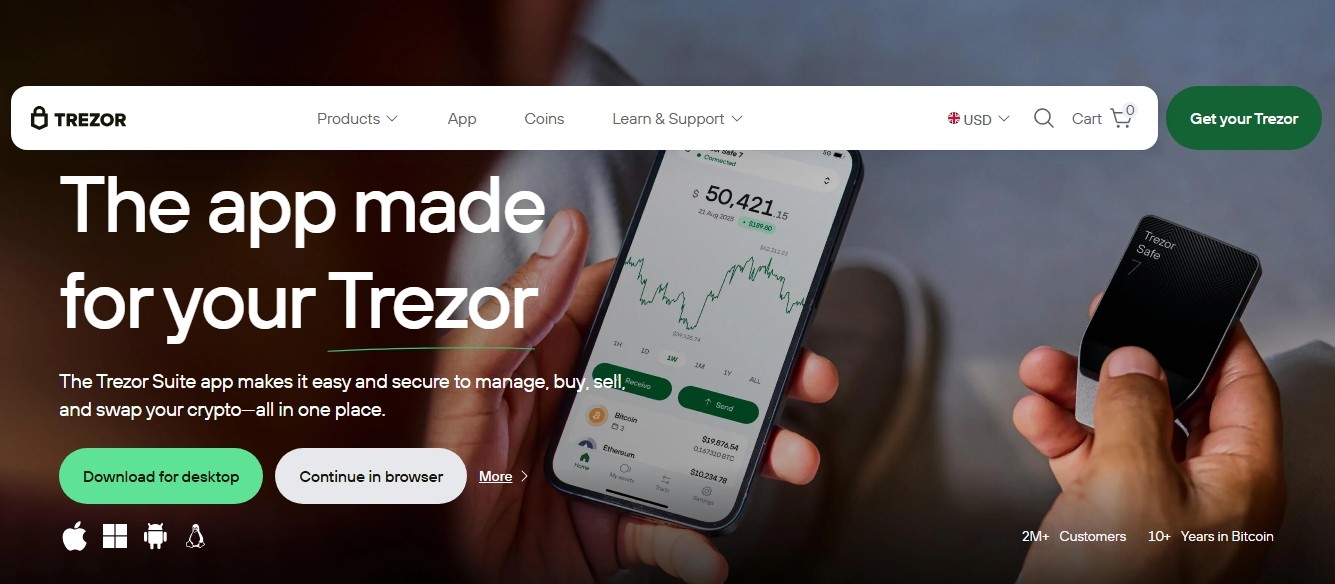
Getting Started with Trezor: The Ultimate Guide to Securing Your Cryptocurrency
Introduction
In the rapidly evolving world of cryptocurrency, security is more crucial than ever. While software wallets provide convenience, they are also vulnerable to hacking, phishing attacks, and malware. Hardware wallets, on the other hand, offer a secure, offline way to store your digital assets. Among the top choices for hardware wallets is Trezor, a device that combines cutting-edge security with user-friendly features.
This guide will walk you through everything you need to know to get started with Trezor: from unboxing and setup to security best practices and advanced usage tips. By the end of this guide, you will be equipped to protect your crypto assets safely and efficiently.
1. What is Trezor?
Trezor is a hardware wallet designed to secure cryptocurrency by keeping private keys offline. Developed by SatoshiLabs in 2014, Trezor has grown into one of the most trusted names in the crypto security space. Unlike software wallets, which store keys on a device connected to the internet, Trezor isolates your private keys, making them inaccessible to hackers.
Key Features of Trezor:
Offline Storage: Private keys never leave the device.
Multi-Currency Support: Supports Bitcoin, Ethereum, Litecoin, and hundreds of other cryptocurrencies.
User-Friendly Interface: Simple setup with Trezor Suite and web apps.
Open-Source Firmware: Transparent code to ensure trust and reliability.
Recovery Options: Easily recover your wallet using a recovery seed.
Trezor models include Trezor One and Trezor Model T, each designed to suit different user needs, from beginners to advanced crypto enthusiasts.
2. Why Choose a Hardware Wallet?
Before diving into setup, it’s important to understand why hardware wallets like Trezor are essential.
Security: Online wallets are vulnerable to hacking. Hardware wallets store your private keys offline, providing a strong line of defense against cyber threats.
Control: With Trezor, you are the only one with access to your private keys. Unlike exchanges or third-party wallets, your crypto is fully under your control.
Backup and Recovery: Trezor allows you to create a recovery seed, which can be used to restore access to your funds even if the device is lost or damaged.
Compatibility: Trezor works with a wide range of cryptocurrencies and integrates with popular platforms like MetaMask, making it versatile for various crypto needs.
3. Unboxing Your Trezor
When you first receive your Trezor device, check the packaging for the following:
Trezor Device: Either Trezor One or Model T.
USB Cable: Used to connect the device to your computer.
Recovery Card: For writing down your recovery seed.
Instructions and Stickers: Official documentation and branding items.
Security Tip: Ensure the package is untampered. Trezor packaging includes tamper-evident seals to protect against physical tampering.
4. Setting Up Your Trezor
Step 1: Connect Your Device
Plug your Trezor into your computer using the included USB cable.
Visit Trezor.io/start to access the official setup guide.
Step 2: Install Trezor Bridge
Trezor Bridge is software that allows your device to communicate securely with your browser.
Download and install Trezor Bridge from the official website.
Step 3: Initialize Your Wallet
On your device, select Create a new wallet.
The device will generate a 12-24 word recovery seed. Write it down on the recovery card—never save it digitally.
Step 4: Set a PIN
Choose a strong PIN to protect access to your Trezor.
The PIN must be entered each time the device is used.
Step 5: Access Trezor Suite
Trezor Suite is the official desktop application for managing your assets.
Install Trezor Suite and connect your device to start sending, receiving, and managing cryptocurrencies.
5. Using Trezor for the First Time
After setup, you can start interacting with your cryptocurrencies.
Receiving Funds:
Open Trezor Suite and select the cryptocurrency you want to receive.
Generate a receiving address and share it with the sender.
Sending Funds:
Enter the recipient’s address and amount.
Confirm the transaction on your Trezor device.
Transactions are signed offline, ensuring maximum security.
Checking Balances and Transaction History:
Trezor Suite allows you to view your balance and transaction history securely.
You can also manage multiple wallets within one device.
6. Security Best Practices
While Trezor provides strong security by default, following these best practices ensures your crypto remains safe:
Never Share Your Recovery Seed: Treat it like the key to your bank account.
Verify Addresses on Device: Always confirm addresses on the Trezor screen, not just on your computer.
Use a Strong PIN: Avoid simple, easy-to-guess PINs.
Keep Firmware Updated: Regular updates protect against security vulnerabilities.
Beware of Phishing Sites: Only use official Trezor websites and software.
7. Advanced Features
Trezor isn’t just for storing crypto; it offers advanced functionality:
Password Manager: Store and manage passwords securely.
Two-Factor Authentication (2FA): Use Trezor as a 2FA device for online accounts.
Cryptocurrency Exchange Integration: Trade directly from your device using supported platforms.
Shamir Backup (Model T): Advanced recovery method for added redundancy.
8. Troubleshooting Common Issues
Device Not Recognized:
Ensure Trezor Bridge is installed correctly.
Try a different USB port or cable.
Forgot PIN:
Enter incorrect PIN three times to trigger the reset process. Use your recovery seed to restore your wallet.
Lost Recovery Seed:
Unfortunately, without the recovery seed, your funds cannot be recovered. Always keep a secure backup.
Firmware Update Issues:
Follow the on-screen instructions carefully. Do not disconnect the device during updates.
9. Keeping Your Trezor Safe in the Long Term
Physical Security: Store your device and recovery card in a safe location.
Redundancy: Consider storing recovery seeds in multiple secure locations.
Regular Checks: Periodically check your Trezor for firmware updates and test recovery.
Avoid Public Networks: Only use your device on trusted computers and networks.
10. Why Trezor is the Ideal Choice
Trezor combines top-tier security with user-friendly features. Whether you are a beginner or an experienced crypto holder, Trezor offers:
Peace of Mind: Private keys are never exposed to the internet.
Ease of Use: The intuitive interface simplifies crypto management.
Trustworthiness: Open-source firmware allows for transparency and security verification.
Versatility: Supports a wide range of cryptocurrencies and applications.
In short, Trezor allows you to focus on building your crypto portfolio without worrying about hacks or lost funds.
Conclusion
Starting your crypto journey safely begins with securing your assets. Trezor provides a reliable and secure solution for both beginners and advanced users, combining hardware security, user-friendly software, and advanced features. By following this guide and adopting best security practices, you ensure your cryptocurrency remains safe for years to come.
With Trezor, your keys, your crypto, your control. Start today at Trezor.io/Start